

You should choose a crypto wallet by matching it to your trading habits, security needs, and how often you access funds. Sounds simple, right?
But when you start comparing options, the choices multiply quickly. For instance, hardware wallets promise maximum security, while software wallets offer convenience. Exchange wallets, meanwhile, give instant trading access.
To make sense of these options, educational platforms like CryptoRoo break down wallet choices for everyday people getting started with cryptocurrency.
This guide walks you through the decision without the technical overwhelm. By the end, you’ll learn which wallet types best protect your digital assets, how private keys work, and when to upgrade to cold storage.
Let’s get started.
What Makes a Crypto Wallet Worth Your Time
A crypto wallet is worth your time because it gives you full control over your funds instead of having to trust exchanges.

When you keep cryptocurrency on an exchange account, you’re basically letting someone else hold your money. Fortunately, self-custody changes that, as you own the keys and control access to your account.
Let’s have a look at how this security process works:
Private Keys and Why They are Important
Private keys give you full control over your cryptocurrency, like owning the actual vault combination. Without your private key, nobody can move your coins or tokens on blockchain networks.
This level of control also comes with certain responsibilities. Losing your private keys means losing access to your funds permanently with no recovery option. Since there’s no “forgot password” button, one reader from Austin told us he lost $2000 because he thought his exchange would recover his keys.
Due to this risk, you should never share private keys with anyone, not even customer support or crypto exchange representatives. Because anyone asking for your private key is running a scam.
Once you understand who controls your keys, the next decision is where to store them.
Hot Wallet vs Cold Wallets Explained
Hot wallets usually connect to the internet, which makes them convenient for cryptocurrency trading and quick transactions. As a result, you can trade cryptocurrency within seconds. The app stays connected, so everything happens quickly.
On the other hand, cold wallets stay offline to protect your assets from hackers and cyber attacks. So your crypto sits there untouched until you physically connect the device.
In practice, most beginners start with hot wallets before moving larger amounts to cold storage later (that’s a good habit). A software wallet on your phone works well for small amounts. And as your investments grow, cold storage will become a safer option.
Desktop Wallets and Mobile Options
Desktop wallets comparatively offer more features and security, but require regular software updates on your computer. They also support more blockchain networks and let you verify transactions in full detail.
In contrast, mobile wallets let you buy crypto and manage funds anywhere using your smartphone. The app sits right next to Google Pay, and you can create a wallet and start trading in about ten minutes.
With these differences in mind, it’s better to choose based on how often you trade and how easily you need access. Active traders often prefer mobile apps, while long-term investors often use desktop wallets for stronger security features.
Hardware Wallets: Your Best Defense Against Identity Theft
The majority of crypto thefts happen because people store everything in internet-connected wallets. But the good news is that hardware wallets can fix this problem by keeping your private keys offline on a physical device you control.
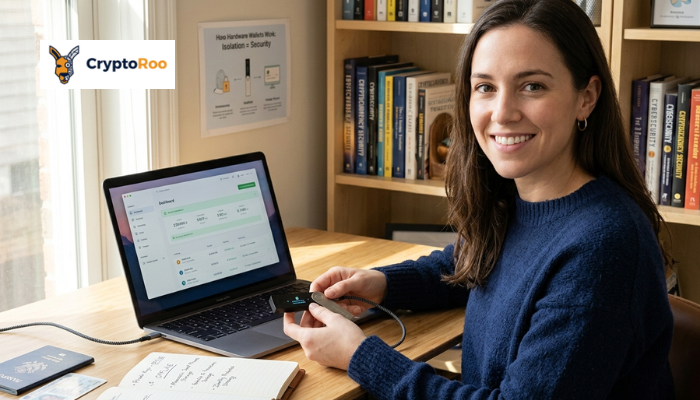
Here’s what makes them worth the investment.
- Physical Device Security: Hardware wallets like Ledger Nano store your crypto on a dedicated device that never connects to the internet permanently. Therefore, your private keys offline stay protected from remote hackers who can’t access them.
- Protection from Multiple Threats: These devices guard against phishing scams, malware, and cyber attacks trying to steal your cryptocurrency remotely (and trust us, they’re getting creative). From our hands-on testing with Ledger Nano devices, offline storage consistently performs better than internet-connected options.
- Reasonable Investment Cost: Most models cost between $50 and $200. To make this easier to justify, crypto education platforms like CryptoRoo provide exchange comparison guides that highlight wallet discounts for new users.
- Transaction-Only Connectivity: With this system, you connect the hardware wallet to your computer only when making transactions, then disconnect for maximum security. The rest of the time, the device stays offline.
- Best Identity Theft Defence: This storage method is your most reliable option for protecting against identity theft since it stores nothing on internet-connected devices. We’ve tested five different hardware wallets, and the peace of mind alone justifies the price tag.
Security is half the battle, but your trading frequency determines which wallet actually fits your routine.
Picking a Wallet Based on Your Crypto Trading Style
Now that you know the wallet types available, the next step is matching one to how actively you trade. Your habits determine which option makes the most sense.
And in general, two trading styles require different approaches:
Active Traders and Crypto Exchange Integration
Frequent traders need hot wallets that sync with crypto exchange platforms for immediate buying opportunities, since timing counts when Bitcoin dips. These wallets keep your assets ready to trade the moment market volatility creates an opening.
To keep up with fast-moving markets, look for wallets that support multiple cryptocurrencies. The crypto market shifts quickly, and switching between apps slows you down. Quick access, instead, helps you to sell or earn rewards when conditions turn favourable.
Keep in Mind: For active trading, speed often takes priority over maximum security when you’re moving funds several times per week.
Long-Term Holders Need Cold Storage
Cold wallets suit long-term investments where you rarely move your cryptocurrency. These hardware devices keep your keys offline, which reduces exposure to online threats when holding Bitcoin or other digital assets for extended periods. This is why the volatility of crypto makes secure storage more important for patient investors.
A balanced setup also works best here. Transfer only what you need for active trading to hot wallets, and keep the rest in cold storage. This approach gives you flexibility while limiting exposure to cyber attacks and large losses.
Get Started Without Overcomplicating Things
Starting simple means you learn wallet security without risking serious money on day one. Follow these steps to set up your first crypto wallet the right way:
- Download a Trusted Mobile Wallet App: Most beginners overthink their first choice and get stuck comparing options. A mobile app works well here for learning the basics before moving to hardware wallets.
- Buy Crypto through a Reputable Exchange: Once your wallet is ready, create an exchange account and begin with small test transactions (plan for $20, not $2000). Beginner-focused resources like CryptoRoo’s educational programs can walk you through setting up your first exchange account step by step.
- Start with One Cryptocurrency: Adding multiple altcoins too quickly creates confusion. It’s because learning how transactions work, how to verify transfers, and how blockchain networks process payments takes time when you’re new to crypto.
- Collect the Recovery Phrase on Paper: This phrase lets you restore wallet access if your phone breaks or gets lost. That’s why store it somewhere secure after setup.
- Enable Security Features. Two-factor authentication adds an extra protection layer if your wallet app supports it. Most importantly, avoid connecting wallets to sketchy websites or clicking random links promising free cryptocurrency rewards.
As you begin using your wallet, handling real transactions reinforces these habits over time. The goal here is to protect your digital assets while keeping access simple enough that you’ll use your wallet consistently.
Your Next Move with Crypto Wallets
Picking the right crypto wallet doesn’t require a computer science degree. Match the wallet type to how you actually use cryptocurrency. For example, active traders need hot wallets for speed. Long-term investors benefit from cold storage security. Most people end up using both.
Your digital assets deserve protection that fits your trading style. Start with a simple mobile wallet to learn the basics. Practice with small amounts. Then add hardware wallets once your investments grow past a few hundred dollars.Ready to compare crypto exchanges and find the best place to buy your first cryptocurrency? CryptoRoo’s exchange guides break down fees, security features, and wallet compatibility so you can make informed decisions from day one.
